This Nutrition Connection CE article appeared in the September/October 2026 issue of Nutrition & Foodservice Edge magazine. To view a PDF of this article click HERE.
To earn 1.0 GEN CE credit, purchase the CE article in the ANFP Marketplace HERE or click the button below and complete the quiz.

This course is a level II continuing competence. View continuing competence level descriptions HERE.

Vitamin D Deficiency: The Clues We Miss: Looking Beyond the Bones
By: Kathy Murdock, MS, RD, LD
The CDM, CFPP at bright horizons notices that Mary— who is 81 years of age — has not been coming to the dining room for meals or activities recently. Nursing staff reports she is tired more often and says her legs feel weaker. A small skin tear on her arm seems slow to heal. Her daughter has also noticed that she is no longer getting her nails and hair done at the salon. Mary, who once took pride in her appearance, no longer seems to enjoy many things that brought her joy. She has complained about brittle nails and hair shedding. Most days, Mary remains indoors. Her appetite has declined; she drinks little milk and does not eat fish or seafood.
It would be easy to attribute these changes to aging, inactivity, depression, or simply not eating well. Any of those could be part of Mary’s story. Many times, deficiencies in nutrients show up in ways that are often overlooked.
Most people only associate vitamin D deficiency with bones. However, vitamin D has many functions and has been associated with various other symptoms. While prolonged or severe deficiency can contribute to osteomalacia, bone pain, muscle aches, weakness, and fractures, subtle indicators of vitamin D deficiency may go unnoticed. Many people with low vitamin D have no obvious symptoms, while other concerns can be vague enough to blend into the background of chronic illness and aging. For example, skin, hair and nail health as well as mood changes and depressive symptoms have been associated with vitamin D deficiency.
MORE THAN A BONE NUTRIENT
Vitamin D is unusual because the vitamin we eat, take in a supplement, or produce in the skin is not yet in its active form. When ultraviolet radiation (UVB) reaches uncovered skin, it begins the conversion of 7-dehydrocholesterol to previtamin D3 and ultimately vitamin D3. Aging skin has less capacity to synthesize vitamin D in response to UVB exposure. At the same time, many older adults spend more time indoors because of illness, decreased mobility, fear of falling, weather, or residential living. The combination of less efficient production and fewer opportunities for direct sunlight can compound risk. A bright window does not provide the same benefit because UVB radiation does not pass through glass.
After vitamin D enters the circulation, the liver converts it to 25-hydroxyvitamin D, or 25(OH)D. This is the primary circulating form and the form typically measured when vitamin D status is evaluated.
The kidneys then take on a critical role. An enzyme called 1-alpha-hydroxylase converts 25(OH)D to calcitriol, the active hormone. This conversion is tightly regulated by calcium and phosphorus balance, parathyroid hormone, or PTH, and fibroblast growth factor 23, or FGF23. When blood calcium falls, PTH helps stimulate production of active vitamin D. Calcitriol then increases intestinal absorption of calcium and phosphorus and participates in maintaining mineral balance.
When vitamin D remains inadequate, calcium absorption may decline, PTH may rise, and the body may draw minerals from bone to help maintain blood calcium. This is one reason deficiency can eventually contribute to osteomalacia, bone pain, weakness, and fractures.
Understanding how the kidneys are involved in the conversion of vitamin D explains why vitamin D management can become more complicated in chronic kidney disease. Declining kidney function can impair production of active calcitriol while changes in phosphorus, PTH, and FGF23 further disrupt mineral metabolism. In these residents, simply offering more vitamin D-rich foods or adding an over-the-counter supplement will not treat the underlying problem.
Vitamin D receptors are found in muscle, skin, immune cells, and many other tissues. This wider distribution helps explain why researchers continue to study vitamin D well beyond the skeleton, although an association with a symptom does not necessarily mean vitamin D deficiency caused it.
SYMPTOMS HAVE NO NAME TAGS
Mary’s weakness and aching may raise concern for vitamin D deficiency, but her other symptoms are usually overlooked. Low vitamin D status has been associated with depression, and vitamin D signaling may influence inflammation, oxidative stress, and pathways involved in brain function. This does not mean low vitamin D is the cause of depression or that vitamin D is a treatment for every person with low mood. Mood changes occurring alongside limited intake, little outdoor exposure, weight loss, or other nutrition concerns may simply be another reason to examine the whole clinical picture.
Vitamin D and calcium also participate in skin-cell differentiation and wound repair. Research suggests vitamin D plays a role in processes needed to restore the skin barrier after injury. However, many nutrients are vital in wound healing. Protein and overall calorie intake, vitamin C, zinc, circulation, glucose control, minimizing pressure, and reducing infection must also be considered.
Hair thinning and changes in nail quality may surface during that same assessment, but they should remain supporting clues rather than signs used to diagnose vitamin D deficiency. Vitamin D receptors participate in hair-follicle cycling, and lower vitamin D levels have been reported in several forms of hair loss. Iron, zinc, protein and biotin deficiencies, as well as thyroid disease, medications, and other illness may also contribute to changes in hair or nails.
Nutrient inadequacies also tend to travel together when the underlying problem is poor intake, weight loss, restrictive eating, or malabsorption. A low vitamin D status may therefore be one piece of the puzzle of malnutrition rather than an isolated finding. Fatigue might prompt consideration of iron, folate, vitamin B12, protein, and energy intake. Poor healing may raise questions about protein, vitamin C, zinc, and total calorie intake. A useful assessment follows the pattern of symptoms and intake rather than assigning each concern to a single nutrient.
WHEN A GOOD DIET IS NOT ENOUGH
Robert is very conscious of nutrition and consumes a balanced diet. He eats salmon, drinks fortified milk, and takes a multivitamin. Yet his vitamin D remains low. The missing piece is found in his gastrointestinal history. Robert has Crohn’s disease and previously had part of his small intestine removed.
Vitamin D is fat soluble, so its absorption depends in part on normal digestion and absorption of dietary fat. Crohn’s disease may involve the small intestine, and intestinal surgery can further reduce absorptive area. During active disease, diarrhea, reduced appetite, food avoidance, restrictive diets, inflammation, and certain medications used to treat the condition can compound the problem.
Other gastrointestinal conditions can create similar challenges. Celiac disease damages the intestinal villi and may affect absorption of vitamin D along with iron, folate, zinc, and other nutrients. Ulcerative colitis primarily involves the colon, but active disease, diarrhea, reduced intake, inflammation, and dietary restriction may still contribute to inadequate nutrient status. Pancreatic insufficiency, cystic fibrosis, short bowel syndrome, certain liver or biliary disorders, and gastric bypass can also interfere with the metabolism of fat-soluble vitamins.
These conditions reinforce an important nutrition principle: when absorption or intake is compromised, a single deficiency rarely tells the entire story. Vitamin D may be low alongside iron, folate, vitamin B12, zinc, calcium, magnesium, protein, or other nutrients depending on the disease process and eating pattern. The care plan should look beyond one laboratory value to overall nutrition status. Rarely does a single nutrient deficiency occur in isolation.
For Robert, the menu still matters, but a well-planned diet cannot always overcome malabsorption. Supplementation and medical monitoring may be necessary even when appropriate foods are being offered.
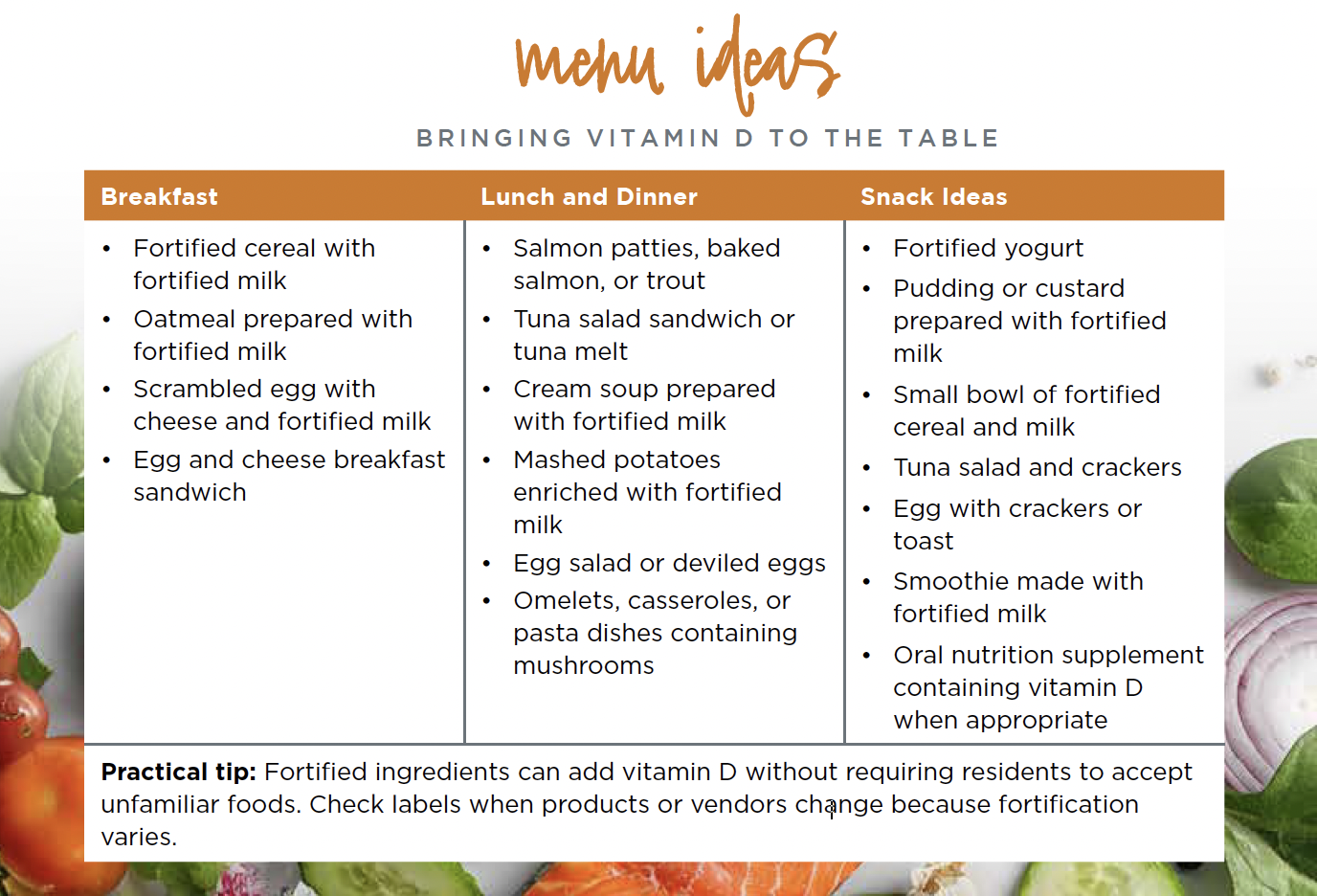
BRINGING VITAMIN D TO THE TABLE
Few foods naturally contain large amounts of vitamin D, making thoughtful menu planning and fortification especially important. Fatty fish such as salmon and trout are among the richest natural sources. Fortified milk and plant beverages, fortified cereals, eggs, tuna, sardines, and some types of mushrooms contain vitamin D.
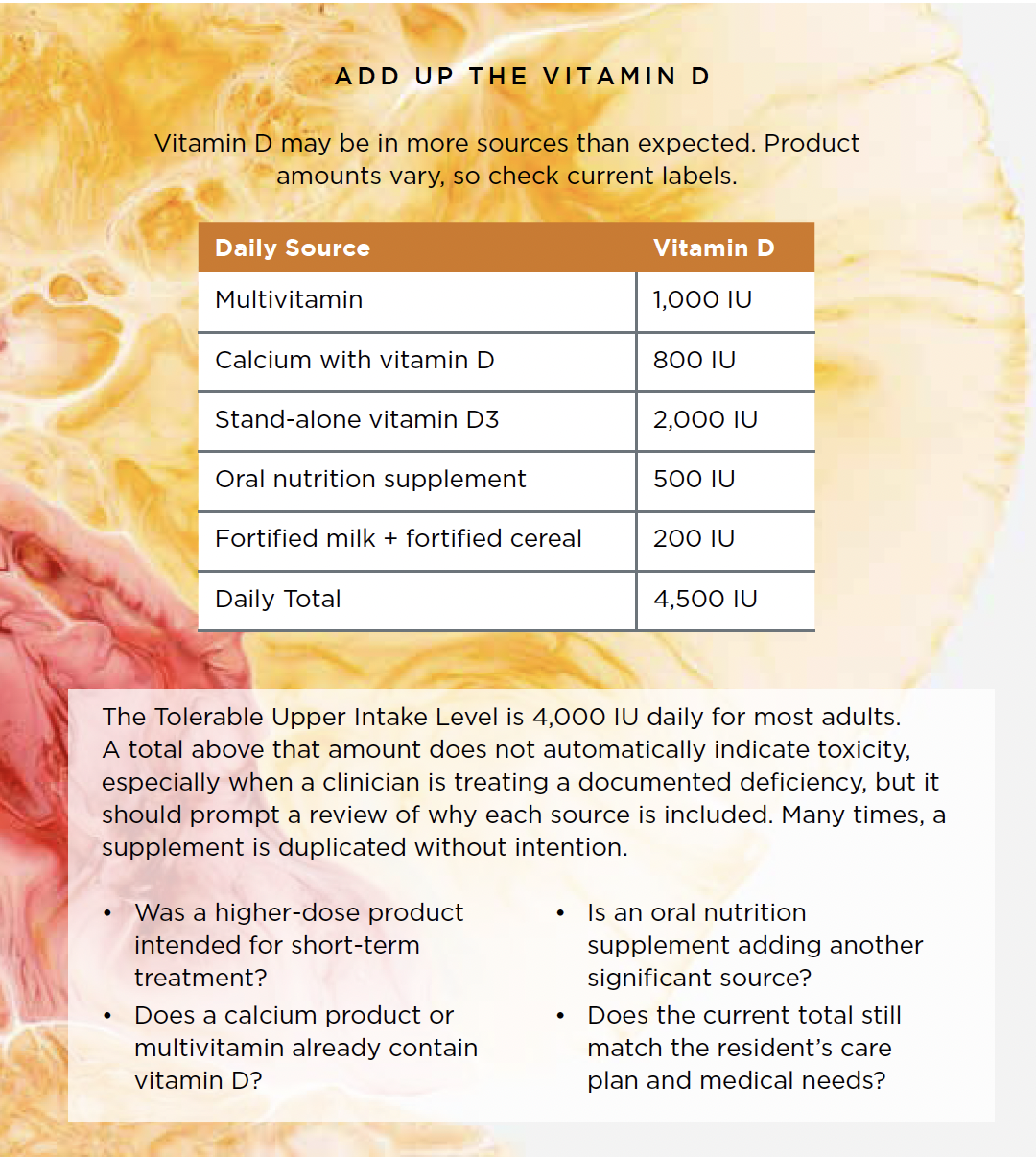
For adults older than 70, the Recommended Dietary Allowance is 800 IU, or 20 micrograms, daily. In long-term care, however, what is served and what is consumed can be very different. Salmon provides no vitamin D to the resident who refuses fish. Fortified milk does not contribute much when it repeatedly returns to the kitchen untouched.
The CDM, CFPP is in an excellent position to recognize what residents are consuming from day to day. Repeated refusals, smaller portions, declining appetite, changes in beverage preferences, or discontinuation of a previously accepted nutrition supplement can substantially alter nutrient intake even when the written menu has not changed. Sharing these observations with the RD and interdisciplinary team (IDT) can help identify concerns earlier.
WHEN THE DIET NEEDS HELP
Diet should remain an important part of the plan, but there are circumstances in which food alone may not provide enough vitamin D. Poor appetite, unintentional weight loss, swallowing difficulties, restrictive diets, very low overall intake, malabsorption, and conditions affecting vitamin D metabolism may make supplementation appropriate.
In long-term care, supplementation is best considered within the resident’s overall care plan rather than as a stand-alone nutrition decision. The CDM, CFPP may identify a persistent pattern of poor intake or refusal of vitamin D-containing foods. The RD can evaluate actual intake, weight trends, nutrition status, supplement use, and other factors that may increase risk. Nursing observations can contribute information about changes in function, symptoms, and food acceptance.
When deficiency is suspected, laboratory evaluation may be needed, or when chronic diseases or malabsorption complicates vitamin D metabolism, the physician or prescribing provider should be involved in determining the appropriate evaluation and treatment. Recommendations can then be incorporated into the interdisciplinary care plan and monitored alongside other nutrition and medical needs. Communication within the interdisciplinary care team and medical provider is fundamental when determining what testing and treatment may be appropriate.
Supplementation should not be just adding another pill. We should ask why the resident may not be meeting needs, and which intervention best addresses the cause. For adults age 75 and older, current Endocrine Society guidance supports vitamin D intake as part of prevention, while still favoring daily, lower-dose supplements and individualized clinical judgment when medical conditions or treatment needs are present.
TWO RESIDENTS, TWO DIFFERENT PATHS
Mary’s limited intake along with reduced outdoor exposure, age-related decline in vitamin D synthesis, and changes in function gave her care team several reasons to investigate further. Vitamin D became part of her plan, but so did protein and calorie intake, activity, mood, wound healing, and evaluation for other possible contributors to her symptoms.
Robert’s appetite was good and his diet contained good sources of vitamin D, but Crohn’s disease and previous intestinal surgery affected how well his body could use what he consumed. Maintaining a nutrient-dense diet remained important, while supplementation and medical monitoring addressed needs the menu could not meet by itself.
Although these two examples focus on residents in healthcare settings, individuals who are incarcerated are also at risk for vitamin D deficiency. CDM, CFPPs working in corrections should be aware of this at-risk population.
Low vitamin D can develop through several pathways: inadequate dietary intake, limited opportunities for cutaneous synthesis, poor overall food intake, impaired gastrointestinal absorption, or altered synthesis associated with disease. In older adults, reduced skin synthesis and more time spent indoors can occur together, while illness and appetite changes increase the risk of deficiencies.
When low vitamin D develops in the setting of poor intake or gastrointestinal disease, it may accompany other nutrient inadequacies rather than occur alone. Looking beyond single nutrient deficiencies helps the care team identify problems that might otherwise be missed and build a plan that supports bone health, healing, strength, function, and overall diet quality. A thoughtful approach begins with the whole resident. Recognizing the clues, understanding the likely cause, and involving the interdisciplinary care team allows food, supplementation, medical treatment, and monitoring to be used where each is most appropriate.
About the Author
Kathy Murdock, MS, RD, LD
Kathy Murdock has been working in nutrition and dietetics since 2007. Her current role is with Davita Kidney Care. For many years, she worked as a consultant dietitian in long-term and acute care in rural southeast Missouri and northeast Arkansas. She has a passion for teaching, writing, and public speaking. At the beginning of her career, Murdock was employed for eight years at a community college in northeast Arkansas teaching future CDM, CFPPs and nursing students.