This Nutrition Connection CE article appeared in the July/August 2025 issue of Nutrition & Foodservice Edge magazine. To view a PDF of this article click HERE.
To earn 1.0 GEN CE credit, purchase the CE article in the ANFP Marketplace HERE or click the button below and complete the quiz.

This course is a level II continuing competence. View continuing competence level descriptions HERE.

Summertime Drinks to Prevent Dehydration in Older Adults
By: Kathy Murdock, MS, RD, LD
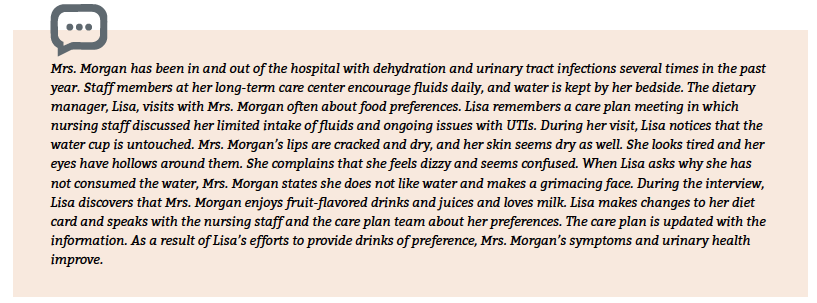
DID YOU KNOW THAT DEHYDRATION is one of the major health concerns in the elderly? Dehydration increases the risk of morbidity and mortality among older adults. The effects of dehydration can lead to many issues including frequent falls, urinary tract and other infections, confusion, weight loss and delayed wound healing. This leads to increased hospitalizations and may negatively impact funding for facilities. Mrs. Morgan’s case is just one example of the many reasons why residents may not be consuming adequate fluids.
Other risk factors for dehydration in older adults include avoiding fluids due to increased urgency to urinate which leads to avoidance of fluids, loss of thirst response, use of diuretics, altered kidney function, and dementia-related forgetfulness.
SYMPTOMS OF DEHYDRATION
Mrs. Morgan suffered from some of the most common symptoms of dehydration, including confusion, dizziness, dry lips and skin, fatigue, and sunken eyes.
Other symptoms may include:
- Falls
- Muscle cramps
- Dark, amber colored urine
- Constipation
- Impaired wound healing
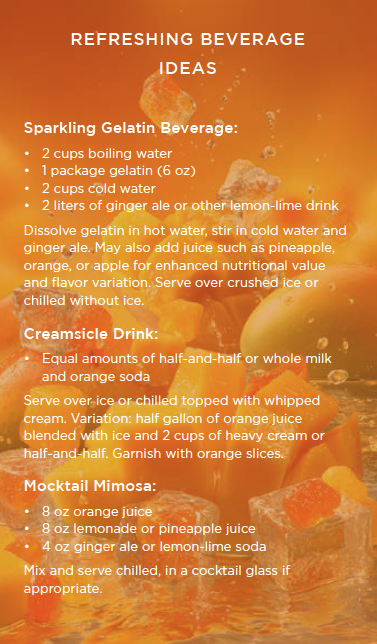
CDM, CFPPs in long-term care facilities can play a vital role in preventing dehydration. Finding ways to incorporate more fluids in a fun and exciting way can break the monotony and bring a sense of joy to the community. Some ideas are listed below:
- Soup of the day: Even in hot weather, adding an option of soup to the menu can encourage fluid intake. Some individuals enjoy soup year-round, and this also adds budget-friendly variety to the menu.
- Fruit: Add seasonal fruit as a dessert option daily. Watermelon, strawberries, and peaches are examples of fruits high in water content.
- Gelatin desserts: Offer gelatin desserts or snacks daily in the summer. Gelatin can be a budget- conscious addition to the dessert menu that promotes fluid intake.
- Flavored waters: Try different flavors to entice residents to drink. Some examples are adding a small amount of gelatin to water or sparkling water along with pieces of fruit as allowed per diet orders (strawberry with slices of lemon or orange with slices of lime).
- Fruit ice: Puree berries and other fruits along with ice and make homemade “slushies.” Incorporate them into an activity for summertime fun, such as a BBQ Day or a 4th of July picnic.
- Hydration stations or carts are common, but can be made more appealing by celebrating holidays or adding themes like Beach Day or Tropical Island Day; or themes based on classic television shows such as “Love Boat” or “Gilligan’s Island.”
- Happy hour: Create a drive-in where residents can “cruise” in for refreshments. Crush some ice and add fruit syrups to sparkling water or ginger ale, or make root beer floats. Set the mood by playing classic music with 1950s-60s themed decorations.
- Smoothie station: Collaborate with the activity director to plan a smoothie station once a week or month. Choose two or three different smoothie combinations based on resident feedback.
CMS GUIDELINES
The Centers for Medicare and Medicaid Services (CMS) has specific guidance regarding the prevention of dehydration in long-term care facilities. Examples of F-Tags relating to hydration are F-692 and F-807.
- F-692: Nutrition and Hydration Status Maintenance: Surveyors will observe residents for low urine output, dry eyes, reduced elasticity of skin, dry lips/mouth, sunken eyes.
- F-807: Drinks Available to Meet Needs, Preferences/Hydration: Surveyors will ensure that residents are being offered adequate fluids based on their needs and preferences, including foods high in water to encourage hydration.
The interdisciplinary team (IDT) should work together on a plan to avoid dehydration, which can prevent citations in these areas.
SUMMING IT UP
Dehydration poses significant risks for older adults, often leading to issues such as urinary tract infections, falls, confusion, and increased hospital admissions. Symptoms are often overlooked but can be easily detected with increased awareness. CDM, CFPPs—working alongside the interdisciplinary team—can play a vital role in preventing dehydration by creatively incorporating hydrating foods and refreshing summertime beverages into their offerings.
About the Author
Kathy Murdock, MS, RD, LD
Kathy Murdock has been working in nutrition and dietetics since 2007. She is currently a consultant dietitian in long-term and acute care in rural southeast Missouri and northeast Arkansas. She has a passion for teaching, writing, and public speaking. Murdock previously worked for a community college in northeast Arkansas teaching future CDM, CFPPs.