This Nutrition Connection CE article appeared in the 2024 Sept/Oct issue of Nutrition & Foodservice Edge magazine. To view a PDF of this article click HERE.
To earn 1.0 GEN CE credit, purchase the CE article in the ANFP Marketplace HERE or click the button below and complete the quiz.

This course is a level I continuing competence. View continuing competence level descriptions HERE.

Nutrition to Fuel Through Transitions
By: Kristin Klinefelter, MS, RDN, LDN
A TRANSITION, BY DEFINITION, is a change or shift from one state, subject, place, etc. to another (Merriam-Webster). If you type in a Google search “quote about transitions,” it may bring up multiple ‘ahas,’ nods of agreement, smiles, emotions, and memories.
Change is hard. Nutrition and foodservice professionals often assist clients as they transition from one health status to the next. For example, a CDM, CFPP may educate a client who has just transitioned from acute care after a stroke to long-term care on an IDDSI diet. The CDM, CFPP is an integral part of this person’s new life change.
Take a moment to recall the last time you had a transition from one thing to the next. What feelings and thoughts do you have about this memory? You may have felt unsure, anxious, confused, or exhausted. Other words for transition include change, passage, shift, conversion, development, evolution, progression, and transformation. These are all verbs, or action words. In order for our clients to move through their health transitions actively with proper nutrition, they need evidence-based resources and education. As a CDM, CFPP, you have the tools and skills to help them navigate their transitions.
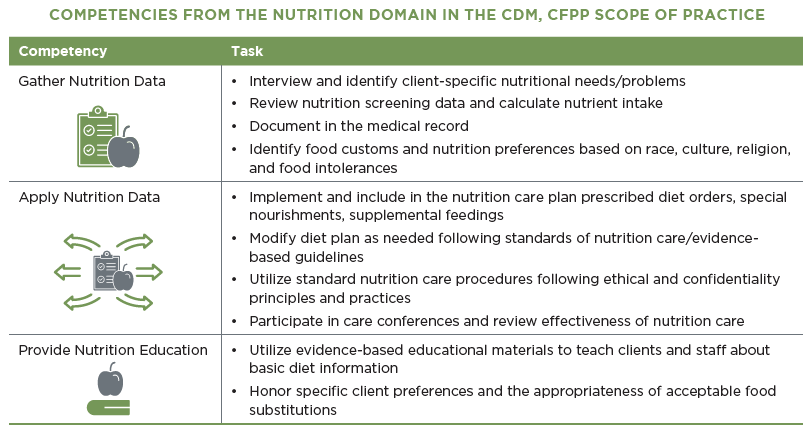
The Certifying Board for Dietary Managers publishes a CDM, CFPP Scope of Practice that clearly outlines the role of the CDM, CFPP in client education. Each task associated with the nutrition competencies details action steps to assist the client in passing through a change process with their diet. See the figure provided.
Now recall some of the emotions you felt when thinking about your last transition. A key element to assist your client with their transition will be empathy as they work through their emotions during this process. Using phrases such as “I am hearing your concern” or “It sounds like this is a scary process for you” will show them that you recognize their emotions during the transition.
Finally, considering where they are in this change will help determine your education plan. The Stages of Change Model, or the Transtheoretical Model, was developed by social scientists James Prochaska and Carlos DiClemente in the late 1970s. Their research began as they studied people trying to quit smoking. Their final conclusion was that people who quit smoking were ready to do so, which seems pretty simple almost 50 years later! The model focuses on where the individual is at when making the change. It outlines how people move through five stages while they change:
- Precontemplation—In this stage, people do not intend to take action in the next six months. They may not know their behavior (in this case diet) is unhealthy for them or may lead to poor health outcomes.
- Contemplation—In this stage, people intend to change their behavior in the next six months. They may feel strong emotions such as dread, confusion, or excitement while contemplating their change.
- Preparation—Here, the person is ready to take steps toward the change in the next 30 days. They see the health benefit of changing their diet.
- Action—In this stage, the person has actively changed their diet or behavior. It is important to note that your client may be in the action stage, but did not get here willingly. For example, they may have suffered a stroke with dysphagia, and they are transitioning to texture-modified foods with the assistance of your multidisciplinary team.
- Maintenance— In this stage, they have continued their diet changes for at least six months and intend to maintain the behavior change going forward.
An unofficial sixth stage is sometimes included: Relapse—because slip-ups periodically occur during the change process.
Knowing which stage your client is in during their transition will help you organize your efforts and support. In addition, you may find it beneficial to learn more about Motivational Interviewing to support the client as they change.
In Motivational Interviewing, the educator is trained to ask questions using the acronym OARS.
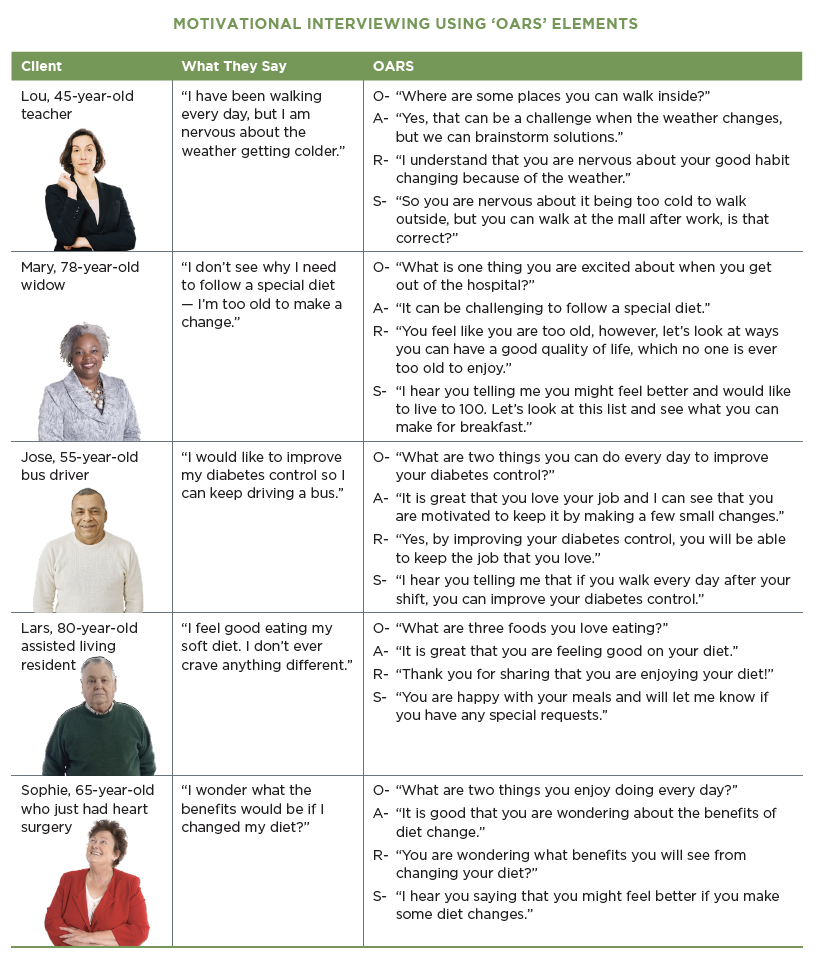
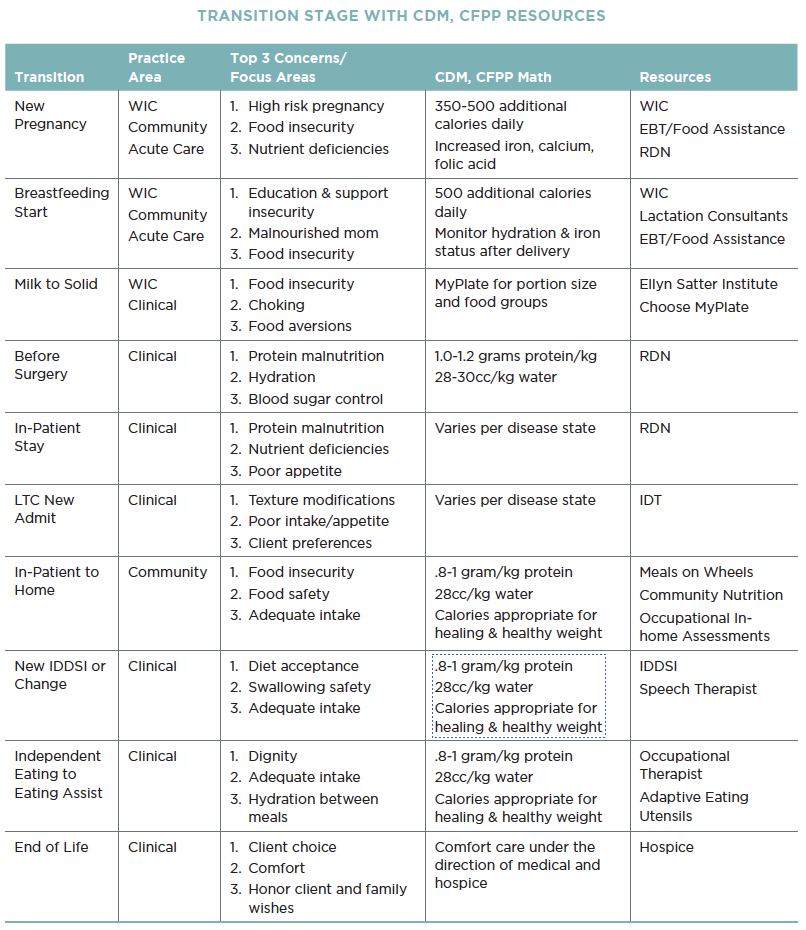
The communication skills using motivational interviewing include asking questions that are: Open-ended, Affirmations, Reflective listening, and Summaries. The questions or statements encourage the client to share how they are feeling about the change, and provide an understanding or deeper understanding. The chart provided here summarizes some OARS statements in response to what the client says.
Hopefully this article can serve as a resource as you assist clients move through transition with their diet and the format is an efficient resource.
SUMMING IT UP
Change is hard for most people. CDM, CFPPs have an important role as they work empathetically with their clients to assist in this change. Meeting the client where they are in the process and using evidence-based resources will create a calmer approach to change for all involved.
About the Author
Kristin Klinefelter, MS, RDN, LDN
Kristin Klinefelter has worked in food service across the entire flow of food. From growing up in a farming family, to working with distribution centers and health and retail food service, she loves processes that improve the flow of food with the end result of feeding healthy food to people of all ages.