This Nutrition Connection CE article appeared in the August 2024 issue of Nutrition & Foodservice Edge Express. To view a PDF of this article click HERE.
To earn 1.0 GEN CE credit, purchase the CE article in the ANFP Marketplace HERE or click the button below and complete the quiz.

This course is a level I continuing competence. View continuing competence level descriptions HERE.

It’s a Gut Feeling: An Overview of Gut Health
By: Kathy Murdock, MS, RD, LD
HAVE YOU EVER WONDERED WHY THE GUT IS SO IMPORTANT TO HEALTH? The trillions of microorganisms that live there play interactive roles in our health, from healthy digestion to mental well-being. The gut microbiome is the environment within the digestive system where bacteria live. It is a diverse environment of good and bad bacteria that are constantly working for or against us.
Picture bacteria in your gut as good and bad guys in your favorite movie; we are always rooting for the good guys and want to defeat the bad guys. Imagine an overgrowth of “bad guys” and not enough “good guys” to keep the gut in tip-top shape. Everything starts falling apart. The buildings start falling, their structures become weak and unable to support the parts. In this movie, the bad guys prevail. We don’t want to see a movie like that! Can you imagine the chaos that follows? Much like the apocalypse depicted in many movies and television series, bad bacteria are like zombies, infecting and eating away at the good that remain. The most resilient good guys survive, trying to rebuild the environment. The gut is the center of our well-being, and the microbiome needs our help to keep it in optimal condition. We must determine what needs to be done to heal, rebuild, and defeat the bad guys.
FACTORS AFFECTING THE GUT
Many factors impact the gut microbiome. As strange as it may seem, there is a direct link between the gut and mental health called the “gut-brain” axis. An unhealthy gut can increase the risk of depression, anxiety, and other mental health issues.
A review published by Clemente, et al., explores the link between the westernized diet, which is high in saturated fats and refined carbohydrates, and poor gut environment, resulting in neuroinflammation and cognitive decline.
When gut health is disrupted (also called dysbiosis), nutritional deficiencies can occur. A study in Science explains that an unhealthy gut environment that occurs often in aging can lead to malabsorption of nutrients, such as B12, magnesium, and iron. Other studies indicate a healthy gut microbiome can help to synthesize certain vitamins and minerals, such as vitamin K and B vitamins. According to Rios-Covian, et al., dysbiosis can prevent the conversion of vitamins to their absorbable forms. Two examples are vitamin D and folate.
Fiber
Many doctors will recommend a fiber supplement for constipation, Crohn’s disease, irritable bowel syndrome, even diabetes. Fiber acts as a prebiotic and helps to feed good bacteria in the gut. In turn, the microbiome increases in diversity. This means that our body is creating new bacteria on its own.
According to Jiongxing Fu, et al., changes in diet due to industrialization of the food supply, which in turn removes much if not all fiber, cause decreases in the intake of fiber in the population. The reduction of fiber in the diet causes changes to the gut microbiome. This also contributes to the increase in chronic diseases due to immune responses regulated by the gut.
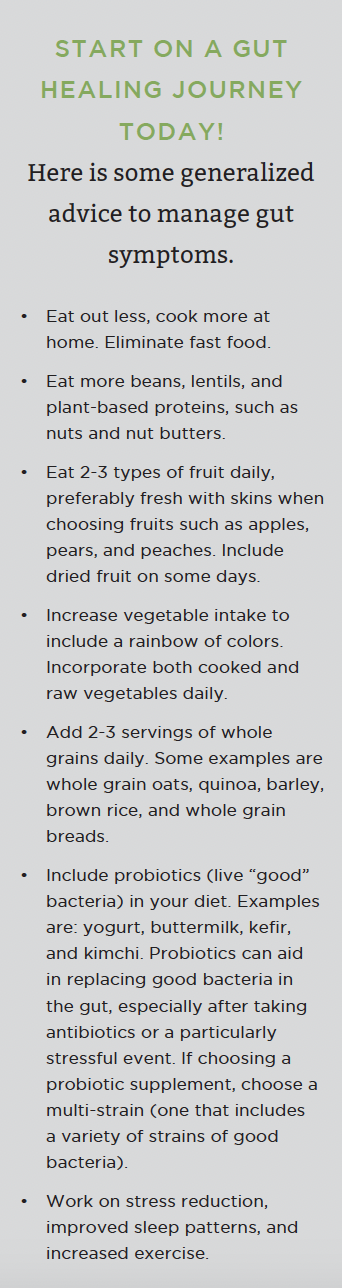
The most healthy, tasty, and easy way to increase fiber in the diet is with food. Fresh fruits, vegetables, and whole grains are all rich in fiber. Ways to incorporate more fiber include adding nuts to whole grain cereal, adding fruit and nuts to yogurt, trading white bread for whole grain, including at least two vegetables with each meal, and trying new types of whole grains such as quinoa or amaranth.
Stress, Exercise, and Sleep
Stress can have a huge impact on the gut. It is well known that chronic stress can cause ulcers, but what other impacts can stress have on our gastrointestinal tract? According to Leigh, acute and chronic stress can impact the microbiome of the gut and decrease immunity to illnesses. It can also cause a change in gut mucus and barrier, leading to reduction in good bacteria. Managing stress can be a difficult but vital part of gut health.
To help alleviate stress, increasing exercise and obtaining adequate sleep can help the gut to heal and increase good bacteria. A study by Smith, et al., outlines the mechanisms of how sleep impacts the gut microbiome. Getting sufficient sleep aids the gut by decreasing stress levels, but also has a direct impact on certain hormones regulated in the gut. Gut health is impacted by sleep patterns and sleep can be impacted by a poor gut environment. We must realize that our health is multi-faceted, and self-care of all aspects is vital to overall well-being.
Medications
Many medications can alter the health of the gut. Some examples are acid-reducing medicines, antibiotics, NSAIDS/ibuprofen, and many antidepressants. While some medication use is certainly necessary, it is important to remember that overuse can have negative effects. Polypharmacy (excessive prescription drug use) is common in the elderly population and oftentimes causes issues that affect the gut microbiome and nutritional status. As a part of the health team, dietary managers can work with the dietitian to come up with strategies when medications may be the cause of gut issues in clients.
Proton pump inhibitors (ex. Protonix) are medications that reduce the amount of acid produced by the stomach. According to Kiecka, et al., “PPIs can affect the composition of gut microbiota and modulate the immune response.” The decrease in stomach acid caused by PPIs allows more harmful bacteria to enter the intestines. An example of this is that the increase in use of PPIs has resulted in a rise in clostridium difficile infections. The decrease in stomach acid caused by PPIs can also cause malabsorption of nutrients such as B12, magnesium, and calcium. This can also increase the risk of irritable bowel syndrome (IBS), colitis, and even chronic diseases such as obesity and diabetes.
Antibiotic use has long been known to cause stomach issues. According to an article in Biomedicines, antibiotics can cause a decrease in the types of good bacteria in the gut. These changes in the gut environment can lead to diarrhea and clostridium difficile infections. Overuse of antibiotics not only changes the health of the gut, but can also lead to antibiotic resistance.
Antidepressants can also impact gut health by causing changes in motility. This may bring about diarrhea and constipation, while also changing the diversity of bacteria in the gut. We should always assess whether our clients are having regular, healthy bowel movements. If not, involve the dietitian and interdisciplinary team in coming up with interventions specific to each client.
Sugar and Artificial Sweeteners
Over the past few decades, an effort to decrease intake of refined sugar has led to overuse of artificial sweeteners. Artificial sweeteners can be detrimental to gut health. Even though they do not have an immediate impact on blood sugar, a study in Nature indicates that many artificial sweeteners can alter gut bacteria resulting in glucose intolerance.
So, do we just go back to using sugar? The best advice is to practice moderation in using both sugar and artificial sweeteners. According to Leite, et al., a high intake of sugar can also affect the gut microbiome by increasing harmful bacteria entering the gut and subsequently decrease good bacteria. Zhao, et al., also discusses how diets high in sugar can alter the gut microbiota resulting in inflammation and an increase in metabolic diseases such as insulin resistance and type 2 diabetes.
WHAT CAN WE DO?
The common dietary advice that is given for diabetes and heart health— such as increasing whole grains, fruits and vegetables—is also important for gut health. Along with managing stress, practicing good sleep and exercise habits, eating a nutritious, balanced diet is vital to keeping our gut environment in top shape.
In your role as dietary manager in promoting gut health, there are many ways to support your clients.
Perhaps instead of a high sugar menu of cake and punch for a party, you can make a yogurt, fruit, and granola bar along with a beautiful fruit water with berries and lemon. Instead of chips and dip, choose more fresh vegetables and even small pinwheels made with chopped fresh vegetables and Greek yogurt wrapped in a whole grain tortilla. (see recipe from The Healthy Epicurean). Another way is to incorporate more whole grains into the breakfast meal, which many times is the best meal for older adults. Work with the activity director to come up with festive, healthier options for activities rather than only items such as cookies and cakes. Think outside the box and make it fun!
SUMMING IT UP
There are many ways to improve gut health. Supporting the gut health of the clients we serve can be challenging, but it’s imperative to long-term well-being and quality of life. Make this a priority in your own health and that of your clients. Together, we can destroy the bad guys so the good guys in our guts prevail.
About the Author
Kathy Murdock, MS, RD, LD
Kathy Murdock has been working in nutrition and dietetics since 2007. She is currently a consultant dietitian in long-term and acute care in rural southeast Missouri and northeast Arkansas. She has a passion for teaching, writing, and public speaking. Murdock previously worked for a community college in northeast Arkansas teaching future CDM, CFPPs.