This Management Connection CE article appeared in the January/February 2026 issue of Nutrition & Foodservice Edge magazine. To view a PDF of this article click HERE.
To earn 1.0 GEN CE credit, purchase the CE article in the ANFP Marketplace HERE or click the button below and complete the quiz.

This course is a level II continuing competence. View continuing competence level descriptions HERE.

Whole-Person Development: Nurturing the Mind, Heart, and Skills of Your Team
By: Kristin Klinefelter, MS, RDN, LDN
“YOU ARE A PERSON, NOT A ROBOT” is a phrase I often say to colleagues and clients. I genuinely believe that no matter how many checklists we create or systems we implement, people cannot simply be programmed to behave in exactly the way we expect. Real life at work is dynamic, and successful teams are built on much more than technical proficiency alone. Focusing on the holistic growth of each team member by nurturing their mind, heart, and skills creates resilient, motivated, and high-performing teams. For leaders, embracing this balanced approach is not just beneficial, it’s essential for truly sustainable organizational success.
BALANCING PROFESSIONAL TRAINING AND EMOTIONAL INTELLIGENCE
While traditional professional development zeroes in on technical skills, I’ve seen firsthand that this is only part of the equation. Integrating emotional intelligence (EI), well-being, and motivation into training programs can fundamentally transform team dynamics. For example, when facilitating team retreats with my colleague who specializes in social-emotional education, she encourages everyone to notice their emotions and to reframe feelings labeled as “negative” or “bad” into simply “uncomfortable.”
This simple shift opens up space for growth and authentic connection.
You might recognize this concept from Disney’s “Inside Out” movie, where emotions like Joy, Sadness, Anger, Fear, and Disgust are the stars. Drawing on Brené Brown’s Atlas of the Heart, the eight core emotions play a central role in shaping whole-person development. When leaders and teams recognize these emotions, we cultivate authenticity, empathy, and psychological safety. For instance, channeling joy can amplify team motivation; acknowledging sadness fosters resilience after setbacks; and constructively addressing anger can spark innovation. Trust lays the foundation for collaboration, and anticipation fuels shared vision and proactive planning. Integrating these principles isn’t just a theory, it’s something I experience with teams every week, and it makes a real difference.
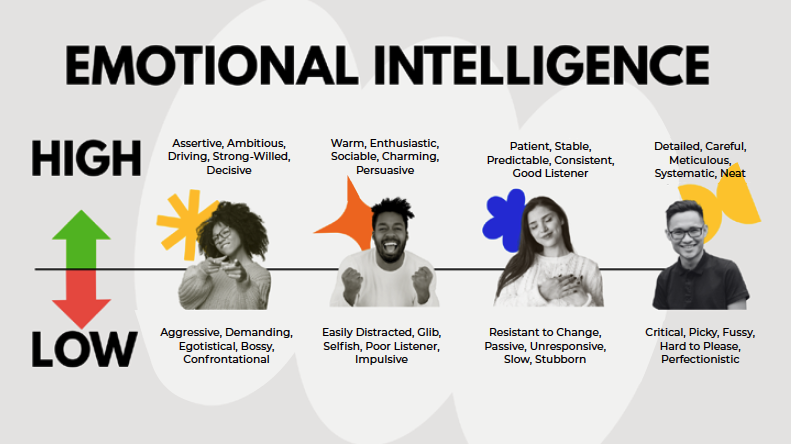
There are many self-assessments available to evaluate emotional intelligence. They are called Emotional & Social Competency Inventory (ESCI). ESCI is designed to measure specific competencies that contribute to effective leadership and personal development.
I often encourage my teams to try a self-assessment, sometimes even linking a worksheet or QR code to make it simple and actionable. We have included a QR code for a sample worksheet with this article.
EMOTIONAL AND SOCIAL SKILLS FOR LEADERSHIP: ESCI COMPETENCY SCALES
Leveraging EI competency scales, teams can assess and develop essential emotional and social skills. Key attributes include:
- Self-awareness: Recognizing and understanding one’s own emotions.
- Self-control: Managing emotional impulses to maintain composure and focus.
- Adaptability: Embracing change and uncertainty with a growth mindset.
- Achievement orientation: Striving for excellence and ongoing improvement.
- Positive outlook: Demonstrating resilience and optimism.
- Empathy: Appreciating others’ perspectives and experiences.
- Organizational awareness: Reading group dynamics and power structures.
- Coaching and mentoring: Supporting others’ development.
- Inspirational leadership: Motivating teams toward shared goals.
- Conflict management: Resolving disagreements constructively.
- Teamwork: Collaborating effectively for common objectives.
These tools, along with practical worksheets, provide a framework for discovering strengths and growth areas, and for bridging gaps between innate abilities and training opportunities. In my experience, when teams commit to this process, they become more agile and adaptive. On one leadership retreat, we utilized an Insights practitioner to assess each person’s individual professional styles. The most meaningful part of the process was sitting down with my team and our personal reports to openly discuss how we can harness our individual strengths and opportunities. It required vulnerability, but we have noticed measurable improved outcomes in the workplace because of it.
FOUNDATIONAL EMOTIONAL INTELLIGENCE SKILLS
Four vital skills form the backbone of emotional intelligence: perceiving, reasoning with, understanding, and managing emotions. Perceiving emotions means tuning into your own and others’ feelings, which is a prerequisite for honest communication. Reasoning with emotions helps guide decision-making and problem-solving. Understanding emotions provides insight into their causes and consequences, deepening empathy. Finally, managing emotions ensures healthy regulation and constructive expression, benefitting both the individual and the team. I’ve seen people transform their leadership style simply by mastering these basics.
BRAIN SCIENCE, INTUITION, AND PAST EXPERIENCES IN EMOTIONAL INTELLIGENCE
The science is clear: our brains process emotional stimuli rapidly, often before we’re even aware of it. Intuition, shaped by our past experiences, guides our responses and decisions. Brain science also shows how stress and emotions can impact attention, memory, and problem-solving. Understanding these mechanisms helps leaders create environments where people feel safe to regulate emotions and trust their intuition. I remember an instance when a teammate’s gut feeling helped us avoid an unproductive and expensive marketing tactic. Their intuition, informed by past experience, was invaluable.
NAVIGATING EMOTIONS AND STRESS MANAGEMENT
Managing emotions is especially critical under pressure. If we’re stressed, our brains are physiologically less capable of logical decision-making and clear communication. Stress triggers increased heart rate, elevated cortisol, and impaired cognition. Chronic stress is linked to 75-90 percent of medical visits (Nerurkar et al) and, frankly, I suspect that number is even higher post-pandemic.
Leaders must recognize stress early and help teams manage it to prevent burnout. Change is a common workplace stressor and if you’ve experienced organizational change lately, you know how contagious stress can be. “Mirror neurons” mean we literally absorb and mimic the emotions of those around us. Ever yawned because someone else did? It’s the same phenomenon with stress.
EMOTIONAL RESILIENCE: DEFINITION AND STRATEGIES
Emotional resilience is the ability to adapt and recover from adversity, maintaining well-being even after setbacks. I’ve seen teams with high emotional resilience bounce back from tough changes and maintain motivation.
Building resilience involves strong relationships, optimistic thinking, and healthy coping strategies. In retreat workshops, we use practical exercises to foster these skills, and the difference is tangible. People feel more empowered and less overwhelmed.
PROBLEM-ORIENTED VS. EMOTION-ORIENTED COPING
Coping strategies fall into two main camps. Problem-oriented coping means taking action by planning, seeking solutions, moving forward. Emotion-oriented coping focuses on managing feelings, such as practicing mindfulness or reappraising negative thoughts. Effective teams use both approaches, adapting their response to the situation and individual needs. I encourage team members to experiment and find what works best for them.
PRACTICAL TIPS FOR TEAM LEADERS: FOSTERING EI AND WELL-BEING
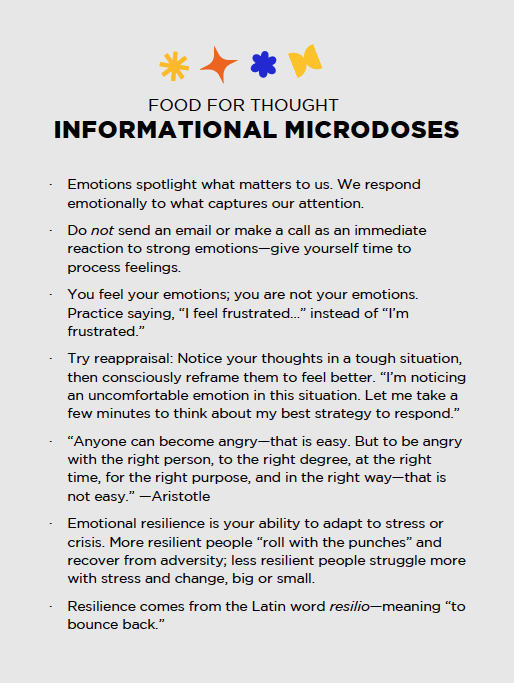
Here are a few strategies for fostering emotional intelligence and well-being in your team members:
- Incorporate EI assessments to identify strengths and areas for growth.
- Promote self-awareness activities—reflection, journaling, feedback sessions. (I hope you find the worksheet helpful!)
- Model emotional regulation: Demonstrate calm, constructive responses. Remember the science of mirror neurons—your energy sets the tone.
- Facilitate skill-building workshops on empathy, communication, and conflict resolution.
- Support stress management with resources for mindfulness, relaxation, and time management—even five minutes can make a difference.
- Encourage open dialogue about emotions and well-being, free of stigma.
- Recognize achievements to boost motivation and positivity.
- Build trust and psychological safety, so everyone feels valued.
- I’ve seen these strategies work wonders in my own teams; the impact on morale and performance is undeniable.
INTEGRATING MIND, HEART, AND SKILLS FOR TEAM SUCCESS
Whole-person development means empowering teams to thrive by nurturing their mind, heart, and skills equally. By balancing technical training with emotional intelligence, well-being, and motivation, leaders can cultivate resilient, high-performing teams ready to face whatever comes their way. Evidence-based strategies like movement, mindfulness, nature time, sleep, and community, provide a roadmap for ongoing growth.
Investing in the whole person isn’t just a best practice; it’s truly essential for building teams that excel in today’s fast-paced, sometimes unpredictable environments.
I hope these insights and stories resonate with you and inspire your journey toward whole-person development for yourself and your teams.
About the Author
Kristin Klinefelter, MS, RDN, LDN
Kristin Klinefelter focuses on whole-person education and training in clinical, community, and corporate settings. Seeing a person harness their individual strengths to excel in work and life is extremely rewarding to her. While not everyone is able to hone their emotional intelligence in a retreat setting, Klinefelter is a firm believer in the benefits of small, impactful practice and change.